
Health & Safety Policy
Health and Safety Policy
Statement
Natural Networks places great importance on the health, safety, and welfare of those who work on our behalf, volunteer, and engage with our activities. We are committed to ensuring the safety of members of the public and fostering a positive health and safety culture throughout our work.
Natural Networks has overall responsibility for updating and implementing this Health and Safety Policy. We will work with others as needed to regularly review this policy.
We strive to ensure that our activities and services are conducted in a manner that prevents harm, injury, or damage to people, materials, property, and the environment. We are equally committed to minimising our environmental impact by controlling waste, reducing pollution, using sustainable methods, and acting as good neighbours to those living near our operational areas.
Natural Networks will take every reasonable measure, including the provision of adequate resources, to discharge its responsibilities by:
- Protecting the safety of members of the public during activities.
- Undertaking risk assessments and implementing findings and recommendations.
- Providing and maintaining safe working systems and equipment.
- Providing information, instruction, training, and supervision to enable volunteers and others to work safely, recognise hazards, and contribute positively to health and safety.
- Ensuring trained First Aiders are present at each session.
- Ensuring appropriate insurance coverage for planned activities and practitioners involved in delivery.
This statement will be regularly reviewed, and any revisions will be communicated to freelance workers and volunteers.
Introduction
This Health and Safety Policy is designed to provide safe systems of work for all who work in partnership with Natural Networks, including volunteers, freelancers, and workers from partner organisations.
The policy outlines the responsibilities of Natural Networks and others to reduce accidents and ill health, in compliance with health and safety legislation, guidance, and standards set by Bristol City Council.
Many activities coordinated by Natural Networks involve volunteers, children, and young people taking risks—both physical and emotional. Risk-taking is a vital part of the development process, helping build confidence, learning, and positive life changes. While Natural Networks ensures that services are as safe as possible, we also recognise the importance of not unnecessarily restricting risk-taking for children and young people.
Duties and Responsibilities
Health and safety must be integral to Natural Networks, influencing all activities, including the use of people, equipment, materials, work methods, and service design.
All committee members, volunteers, and workers are required to:
- Be continuously aware of their own safety and the safety of others.
- Cooperate with Natural Networks to ensure the safety of themselves, colleagues, and the public.
- Assess risks, inspect equipment, report defects, and ensure proper use of equipment.
- Report accidents, near-miss incidents, and hazards immediately to the Natural Networks Committee.
- Identify hazards, assess risks, and implement necessary precautions.
Session Leads must:
- Ensure risk assessments are carried out for all activities.
- Model safe practices, including manual handling techniques.
- Ensure proper use of safety equipment and report any defects.
First Aid
Natural Networks will ensure:
- Sufficient numbers of trained First Aiders are present at each session.
- Suitable first aid equipment is available.
- Accidents are recorded and reported to the Natural Networks Committee.
- Risk assessments determine the level of first aid cover required.
Fire Safety
Natural Networks will:
- Apply for up-to-date licences from the Parks Team at Bristol City Council for fire-related activities.
- Follow Bristol City Council’s guidance on lighting fires in parks.
- Ensure all fire-related activities are risk-assessed, with appropriate equipment and supplies to extinguish fires.
- Only trained personnel will lead fire-related activities.
Manual Handling
Natural Networks will:
- Ensure correct handling techniques are followed to minimise injury risks.
- Model safe manual handling practices for participants.
- Avoid hazardous manual handling where possible.
- Assess and reduce risks from manual handling as far as reasonably practicable.
- Implement manual handling control measures where appropriate.
- Ensure all workers and volunteers use provided safety equipment and report defects.
Equipment
- Equipment purchased by Natural Networks must undergo a hazard analysis before use.
- Equipment bought in the EU must carry a CE mark to confirm compliance with European Safety Standards.
- Freelance workers and partner organisations are responsible for the safety standards of equipment they bring to sessions.
Food Safety and Hygiene
Natural Networks will comply with the Food Safety and Hygiene (England) Regulations 2013 when providing food to the public.
Guidelines include:
- Ensuring food handlers have appropriate Food Hygiene certification.
- Providing anti-bacterial hand wash for participants.
- Using cool boxes for food storage.
- Keeping equipment clean and fit for use.
- Providing warm water and soap for handwashing.
Weather
Natural Networks will:
- Check weather forecasts before sessions.
- Ensure participants wear appropriate clothing.
- Provide hot or cold drinks as needed.
- Escort groups to safety in strong winds or extreme weather.
- Only continue sessions in heavy rain or extreme cold if it remains safe and educational.
Safety Bag
The following items must be taken to every session:
- Whistle/air horn
- Mobile phone
- Water
- Tissues
- Wet wipes
- Foil blanket
- Spare clothing
- Sleeping bag
- Safety shelter
- Fire-starting resources
- Swiss army knife
Toilets
For sessions involving children or vulnerable adults, Natural Networks will:
- Erect a toilet tent with a camping toilet, tissue, sanitising wipes, and hand sanitiser.
- Provide warm water and soap for handwashing.
- Ensure the camping toilet is emptied and cleaned appropriately.
- Signpost to nearby toilets (e.g., Zion and Hedley Park Church) if needed.
Risk Assessments
Risk assessments must:
- Identify hazards associated with activities.
- Evaluate the level of risk in terms of likelihood and severity.
- Implement control measures to eliminate or reduce risks.
- Be completed for all new activities before commencement.
Example Risk Assessment:
|
The Hazard |
Who could be harmed? |
How could they be harmed? |
Level of risk (no controls) |
Control Measures |
Who will carry out controls? |
Level of risk (with controls) |
|
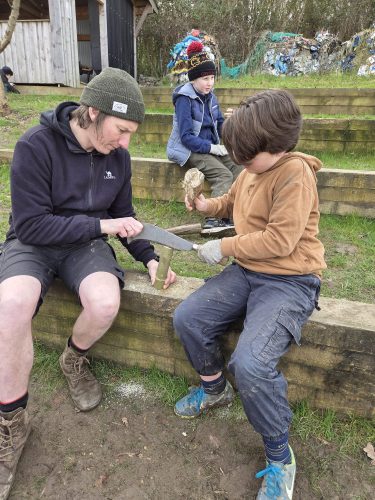
Knives (whittling) |
Participants, trainers, volunteers |
Cuts, lacerations, serious harm |
High |
Safety talk, demo, limited participants, safety gloves, tool counts, proper clothing, regular maintenance |
Trainer |
Low |
Review Date
This policy will be reviewed on 01/01/2027.